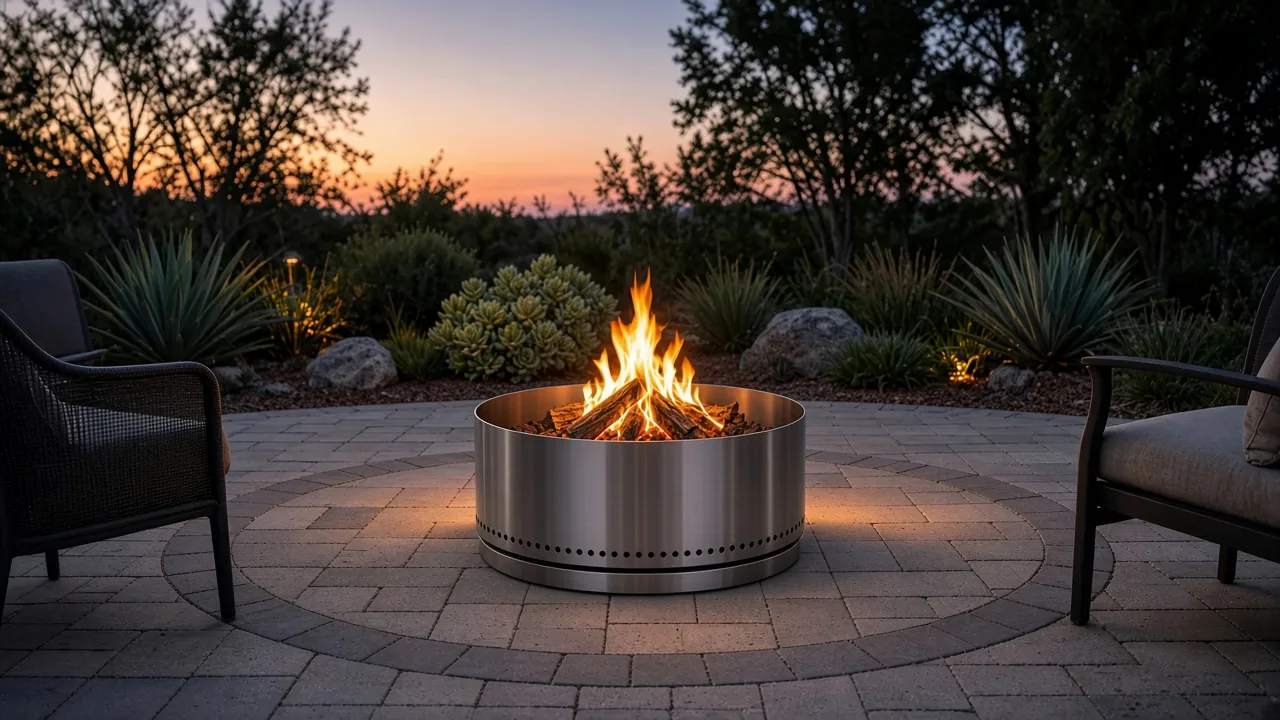
Our picks for smokeless fire pits
“Smokeless” is a real airflow design, not just a marketing slogan — but it is not magic. A double-wall pit pulls air in at the bottom, heats it inside the wall cavity, and pushes it out through upper holes to burn off smoke particles before they drift into your face. You still get some smoke at startup and whenever you burn wet wood.
I work construction in the Los Angeles area. Out here, brand matters far less than having a safe non-combustible pad with real clearances and knowing when burn restrictions keep the cover on.
Product links on this page are affiliate links. If you buy through one, I may earn a commission at no extra cost to you. Read the affiliate disclosure.
Safety first
- Never use a fire pit or fuel-burning appliance indoors, in a garage, or on a poorly ventilated enclosed patio. Carbon monoxide is deadly.
- Set pits on a firm, level, non-combustible pad (concrete, pavers, or stone) — never on synthetic turf — and keep the clearances in the manual.
- Skip wood fires on red-flag / high Santa Ana wind days, and on South Coast AQMD No-Burn days during the wood-burning season. Check current guidance before you light anything.
This is the short list for this project. Read the full safety basics page for carbon monoxide, No-Burn days, GFCI and tester rules, and DigAlert 811.
Quick answer
A mid-size stainless smokeless pit (around 19 to 20 inches wide) is a solid, widely available option for 4 to 6 chairs. Burn only dry, seasoned firewood — never construction scraps, treated wood, or yard trash. Set it on concrete or pavers on a dedicated stand, keep full clearances, and skip wood fires on red-flag days or South Coast AQMD no-burn days.
Size and placement on a SoCal patio
- Around 15–16 inches works for two or three people or car camping, not a backyard group.
- Around 19–20 inches fits most residential patios and 4 to 6 chairs without eating the whole yard.
- 27 inches and up needs a wide open lawn-free yard or large estate patio and burns a lot of firewood.
Always put a wood pit on level concrete, stone pavers, or brick. Even with a stand underneath, do not put a wood-burning pit on synthetic turf, and avoid dry wood decks unless the manufacturer explicitly allows it with a listed heat barrier and clearance. Keep the distances in the manual — models vary, and many portable pits need a wide open circle and plenty of sky above, well away from eaves, fences, and dry plants. Keep chairs far enough back that no one knocks a hot steel shell.
How to light and shut down cleanly
1 Check wind and burn rules first
Check National Weather Service red-flag advisories and South Coast AQMD Check Before You Burn before you stack wood. On a declared No-Burn day in the South Coast Air Basin, residential wood fire pits are typically off-limits during the wood-burning season. Keep a garden hose or bucket of water within reach whenever you burn.
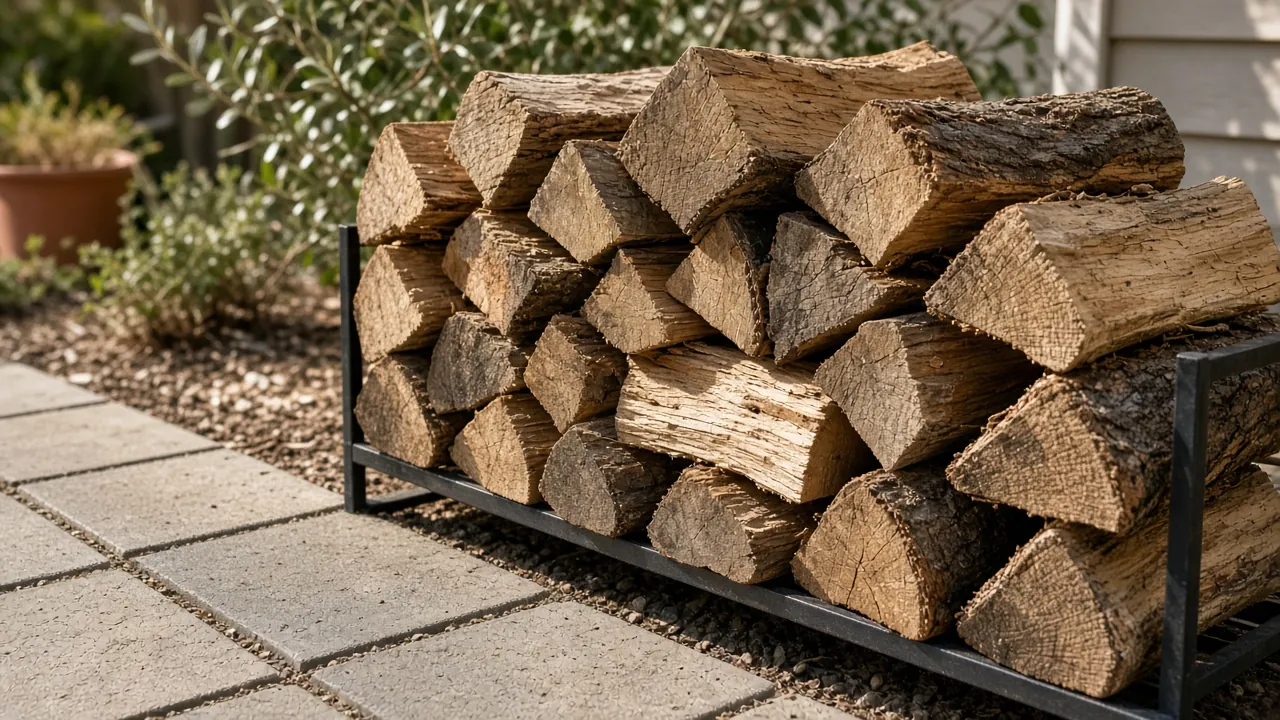
2 Stack dry, split firewood below the rim
Use seasoned hardwood logs short enough to sit flat below the top air vents. Never burn painted wood, pressure-treated lumber, plywood, trash, or lighter fluid. Overloading past the upper vents kills the secondary burn and makes smoke.
3 Start small and let the double wall heat up
Start with kindling and two small splits. A few minutes of smoke at startup is normal. Once the stainless walls heat up, the top ring of jets ignites and the fire cleans up.
4 Never leave a hot pit unattended
Keep kids and pets outside the clearance circle. The exterior steel stays hot enough to burn skin long after the flames drop to embers.
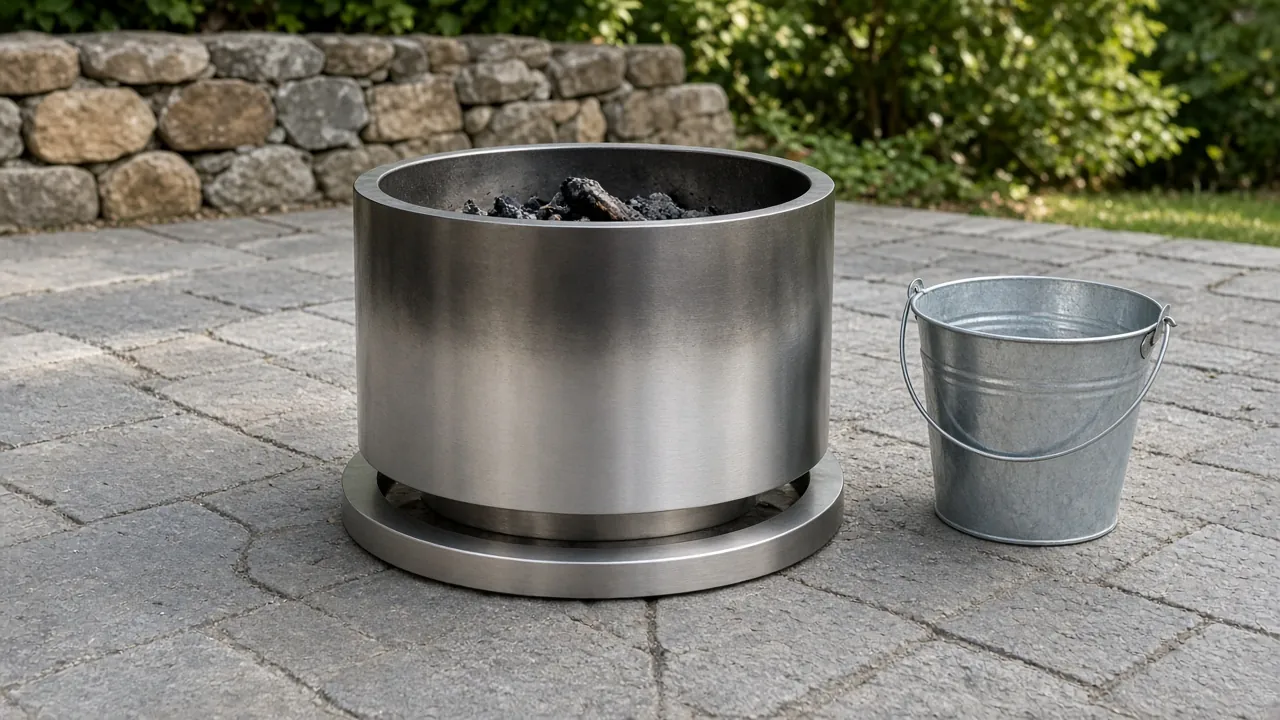
5 Let it burn down, then dump cold ash into metal
Do not dump cold water onto a glowing stainless pit unless the manual approves it — sudden cooling can warp the metal. Let the embers burn down to ash, keep an eye on it until it is cold, and empty the ash pan into a metal bucket away from the house and wood fences.
Common questions
- Do smokeless fire pits eliminate 100% of smoke?
- No. They sharply reduce smoke once the walls are hot and burning dry wood below the top vents. You will still see smoke during startup, when adding cold wood, or in swirling gusts.
- Are smokeless fire pits exempt from LA no-burn days?
- No. A “smokeless” pit is still a wood-burning device. South Coast AQMD Rule 445 covers portable outdoor wood-burning devices, including fire pits, on declared No-Burn days (typically called during the November–February season when air quality is forecast to be poor). Check the current status on Check Before You Burn first.
- Can a spark screen go on top?
- Yes — especially on a breezy evening or near dry landscaping. Check that any screen fits cleanly without blocking airflow or wobbling on the rim.
When to call a pro
If you want a permanent gas fire feature or masonry outdoor fireplace, hire a licensed contractor and licensed plumber and pull any required permits. Do not attempt to convert a portable wood pit to natural gas on your own.
These guides are general information. Follow the manufacturer’s instructions and local codes, and hire a licensed pro when in doubt. Read the full disclaimer.
As an Amazon Associate I earn from qualifying purchases. Affiliate disclosure.
Next step
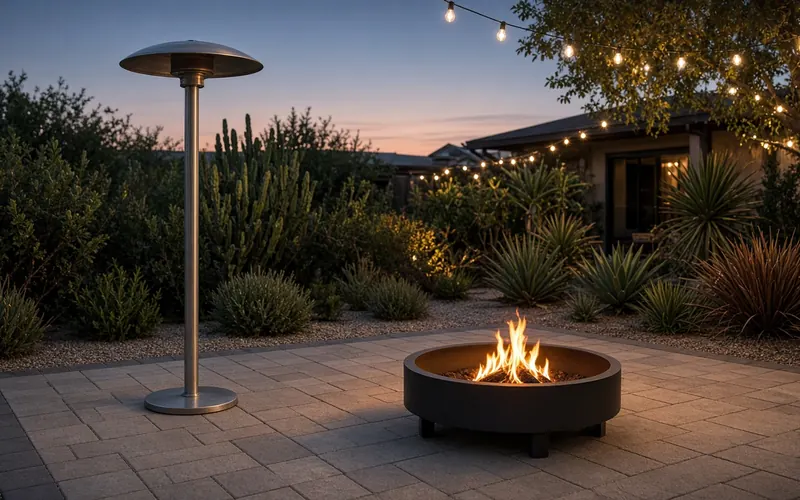
Fire pit vs. patio heater: which one is worth it?
A practical comparison of fire pits and patio heaters for Southern California yards, including wind, burn rules, and clearances.
6 minute read
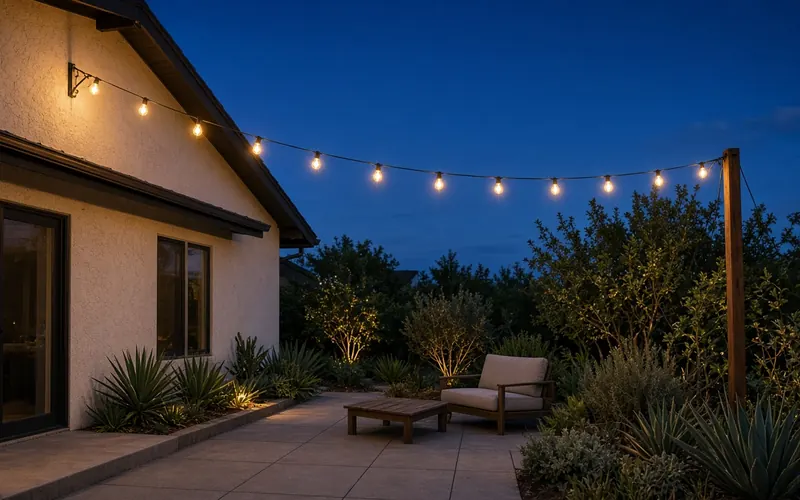
How to hang outdoor string lights so they don't sag
Hang outdoor string lights on a stainless steel guide wire so the cord never carries the span.
5 minute read