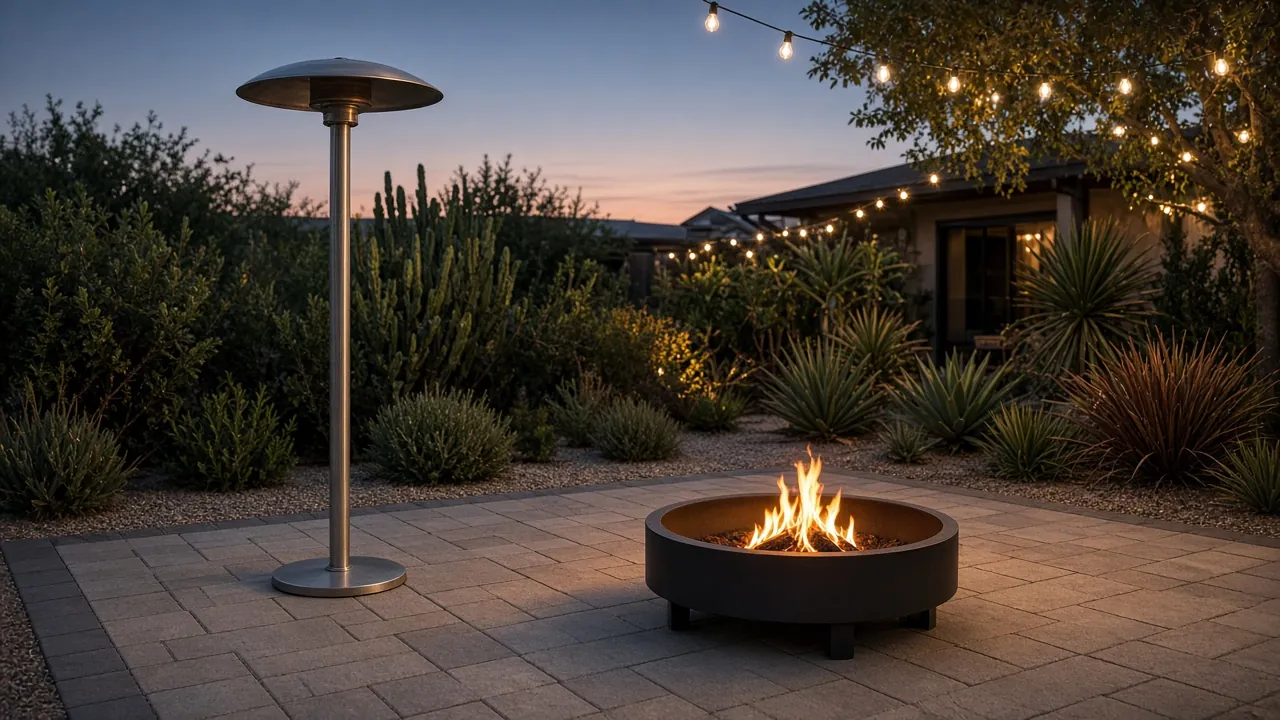
Fire pit vs. patio heater: which one is worth it?
People shop for these as if they do the same job. They do not. A patio heater is for keeping people warm. A fire pit is for gathering around a flame. You get a little of both from either one, but if you buy the wrong type you will either be cold at the dinner table or own a fire pit you cannot safely (or legally) light on the nights you wanted it.
I work construction in the Los Angeles area, and this is the question homeowners ask once the sun drops in December: “Should we get a fire pit or a heater?” The honest answer depends on your yard, your rules, and what you actually want the thing to do.
Product links on this page are affiliate links. If you buy through one, I may earn a commission at no extra cost to you. Read the affiliate disclosure.
Safety first
- Never use a fire pit or fuel-burning appliance indoors, in a garage, or on a poorly ventilated enclosed patio. Carbon monoxide is deadly.
- Set pits on a firm, level, non-combustible pad (concrete, pavers, or stone) — never on synthetic turf — and keep the clearances in the manual.
- Skip wood fires on red-flag / high Santa Ana wind days, and on South Coast AQMD No-Burn days during the wood-burning season. Check current guidance before you light anything.
This is the short list for this project. Read the full safety basics page for carbon monoxide, No-Burn days, GFCI and tester rules, and DigAlert 811.
Quick answer
If the goal is comfortable seating at a dining table on a cool night, get a patio heater. If the goal is a place to sit around a flame — and you can follow local burn rules and keep clearances — get a smokeless wood pit or a propane fire pit. In apartments, condos, tight side yards, and on red-flag days, a heater is usually the more practical option.
What each one is good at
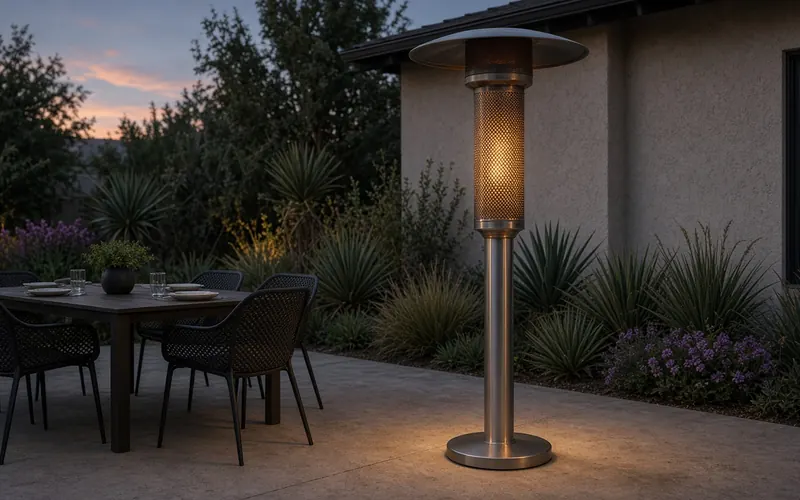
A patio heater puts heat onto people. A full-size propane unit warms a dining table; an outdoor infrared heater warms a bench or a small seating group. There is no wood to store, no ash to dump, and no sparks near dry brush. It is also the easier fit when HOA or apartment rules ban open wood fires.
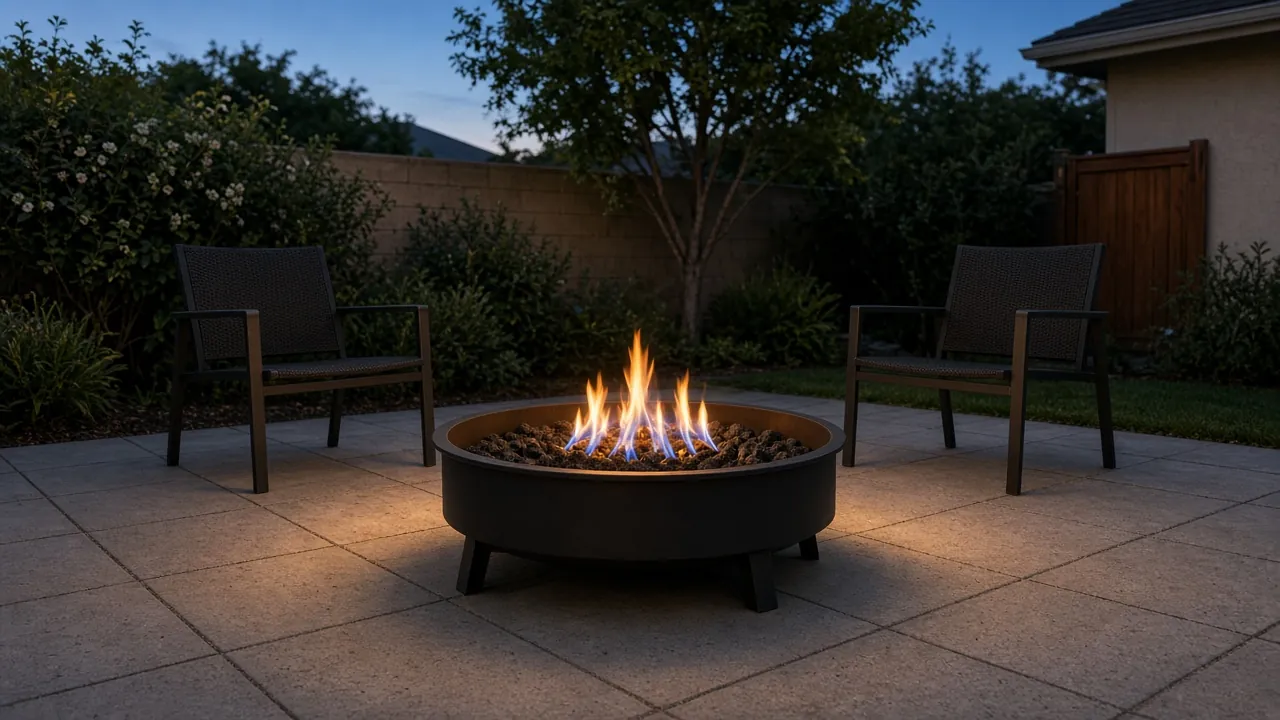
A fire pit is a focal point. People pull chairs into a circle instead of sitting under a glowing mushroom. A wood pit gives you the crackle and real heat; a smokeless design cuts the heavy smoke that otherwise blows straight toward the house on an evening breeze. A propane fire pit sits in the middle: flame and ambiance with a shutoff valve and no wood ash.
SoCal rules and yard space that decide it
- Red-flag warnings and Santa Ana winds. Open flames and flying embers are dangerous near brush, dry fences, and hillside lots. On red-flag days, leave both wood and propane pits off, and shut down tall heaters if gusts can tip them.
- Check Before You Burn. South Coast AQMD Rule 445 restricts residential wood burning on declared No-Burn days across much of the basin, typically during the November–February wood-burning season, including portable outdoor wood fire pits. That can take a wood fire pit out of play on cool, stagnant winter evenings. Dedicated gas or propane fireplaces and fire bowls are a different fuel category, though local fire rules and HOAs still govern them. Check the current status at Check Before You Burn before you light wood.
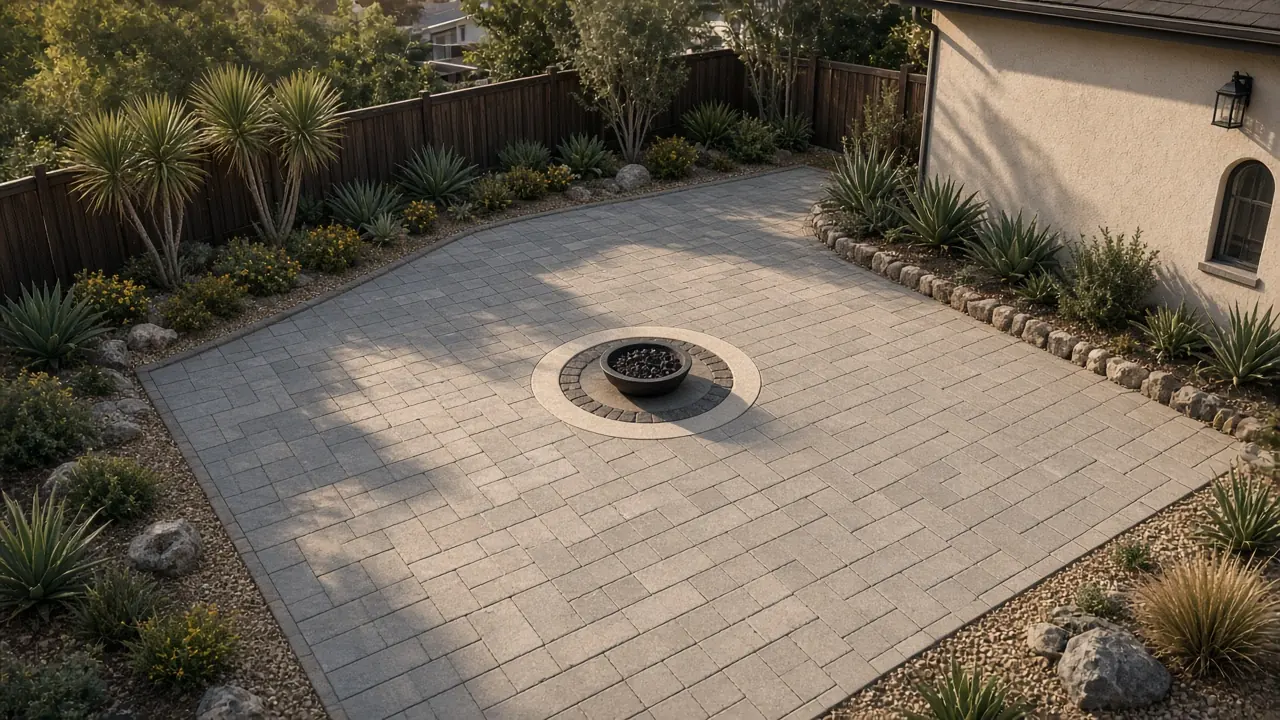
- Pad size and clearance. A fire pit needs a wide, level, non-combustible pad — concrete, pavers, or stone — well clear of fences, stucco walls, overhangs, and shrubs. Follow the distances in the product manual; many portable wood fire pits require a much wider circle and open sky above than a patio heater does (typical full-size propane patio heater manuals often list about 3 feet overhead and about 2 feet from combustible sides). A cramped balcony rarely has safe clearance for any open fire.
A simple way to choose
1 Pick your real goal
Warmth for eating dinner outside, or a flame to sit around after dark? If warmth comes first, start with a heater.
2 Check lease, HOA, and burn rules
If wood fires are barred where you live, you are choosing between a propane fire pit and a patio heater (propane or outdoor electric).
3 Measure the pad and overhead clearance
Check the manufacturer’s side and overhead clearances with a tape measure before buying. Do not squeeze a fire pit under a low pergola.
4 Match the upkeep you will actually do
Wood pits need dry firewood, ash disposal, and a cover. Propane gear needs tank swaps and soapy-water leak checks.
Read the full breakdowns in Our picks for patio heaters for a SoCal backyard and Our picks for smokeless fire pits.
Common questions
- How much clearance does a fire pit or patio heater need?
- Follow the rating plate and manual for your exact unit — distances vary. Typical full-size propane patio heater manuals often list about 3 feet of overhead clearance and about 2 feet from combustible sides. Portable wood fire pits usually need a wider circle and open sky above, away from eaves, fences, and dry plants. If the label is missing, get the manual or do not use the unit.
- Does a propane fire pit keep a patio as warm as a mushroom patio heater?
- Usually no. A 46,000 BTU stand-up patio heater directs radiant heat downward over people’s shoulders and backs. A low propane fire bowl mostly warms hands and knees right next to the rim.
- Can I put a fire pit on artificial turf?
- No. Synthetic turf melts, scorches, and can burn from sparks, radiant heat, or hot ash. Put fire pits and heaters only on concrete, pavers, brick, or stone with the clearance the manual lists.
When to call a pro
A built-in natural-gas fire feature or permanent patio heater needs a licensed plumber (and often a city permit). If you want a hardwired outdoor infrared heater under a patio cover, call a licensed electrician. Never cobble together a gas line from loose fittings.
These guides are general information. Follow the manufacturer’s instructions and local codes, and hire a licensed pro when in doubt. Read the full disclaimer.
As an Amazon Associate I earn from qualifying purchases. Affiliate disclosure.
Next step
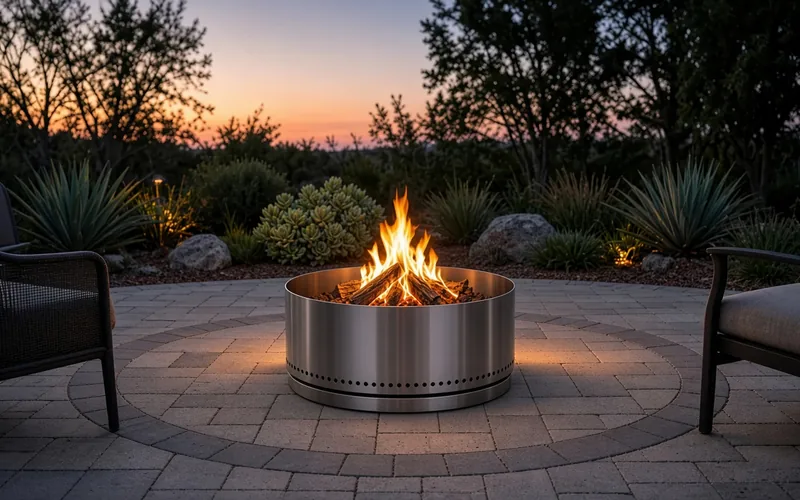
Our picks for smokeless fire pits
How smokeless wood fire pits work, what size to buy, and how to burn cleanly in a Southern California yard.
5 minute read
Our picks for patio heaters for a SoCal backyard
How to choose a patio heater for a Southern California yard, including propane vs. electric, clearances, and wind.
7 minute read