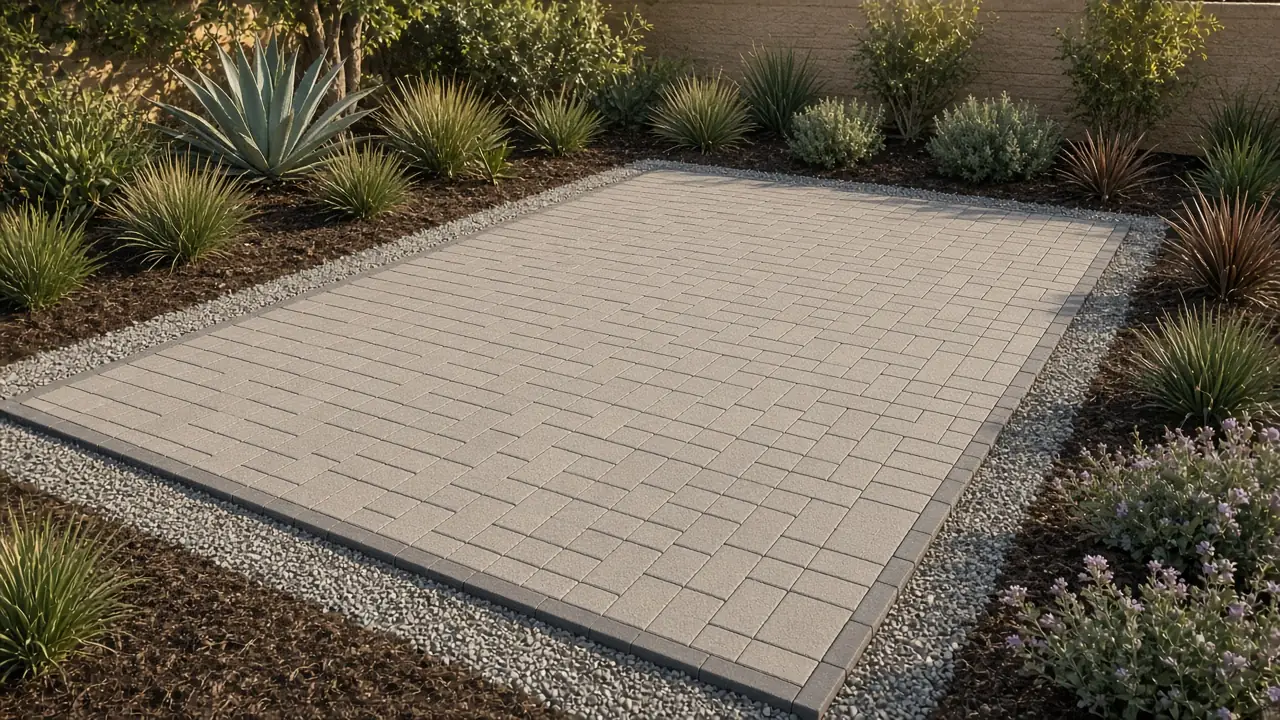
How to build a simple paver patio that stays flat
A paver patio looks straightforward when the pavers are stacked cleanly on a pallet — and turns into a wavy trip hazard six months later if someone skips the base prep. In Southern California, most yards sit on either heavy expansive clay or loose sandy fill. Set concrete pavers straight onto smoothed dirt and the first winter rain will tilt half of them.
I work construction in the Los Angeles area. You do not need heavy commercial machinery for a simple 10-by-12-foot patio pad, but you cannot cheat the excavation depth, the slope away from the house, or the compaction.
Product links on this page are affiliate links. If you buy through one, I may earn a commission at no extra cost to you. Read the affiliate disclosure.
Before you dig
- Call 811 / DigAlert at least two working days before excavating a patio pad.
- Hand-dig carefully near marked utility lines, sprinkler pipes, and the house foundation.
- Slope the finished patio away from the house and keep the paver height well below stucco weep screeds and door thresholds.
This is the short list for this project. Read the full safety basics page for carbon monoxide, No-Burn days, GFCI and tester rules, and DigAlert 811.
Quick answer
Call 811 first, slope the patio away from the house (a common drainage target is about 1/4 inch per foot, or roughly 2 percent), excavate deep enough for a compacted crushed-aggregate base plus about 1 inch of coarse bedding sand plus the paver thickness, compact the base in thin lifts, set pavers with edge restraints, and lock the joints with polymeric sand per the bag. The Interlocking Concrete Pavement Institute’s typical minimum for a pedestrian patio on well-drained soil is 4 inches of compacted aggregate base; on heavy or poorly drained clay, plan for a thicker base (often another 2 to 4 inches) and consider geotextile under the rock.
Why the base matters on LA clay
Southern California adobe clay swells when soaked in January and shrinks hard in August. Pavers themselves flex instead of cracking like a large poured slab — which is why they hold up here when they sit on a compacted crushed-rock base (Class II road base or crushed 3/4-minus stone) with fines that lock tight when tamped. The Interlocking Concrete Pavement Institute (ICPI Tech Spec 2) calls for a minimum of 4 inches of compacted aggregate base for pedestrian patios and sidewalks on well-drained soils, and 2 to 4 inches more base on continually wet or weak soils — which is the safer starting point on heavy LA clay.
If your subgrade is heavy wet clay, a geotextile fabric under the gravel base helps keep clay mud from pumping upward into the crushed stone over time. Never put weed fabric between the bedding sand and the pavers themselves — that traps water and lets pavers slide.
Step-by-step simple paver patio
1 Call 811 and set your string slope
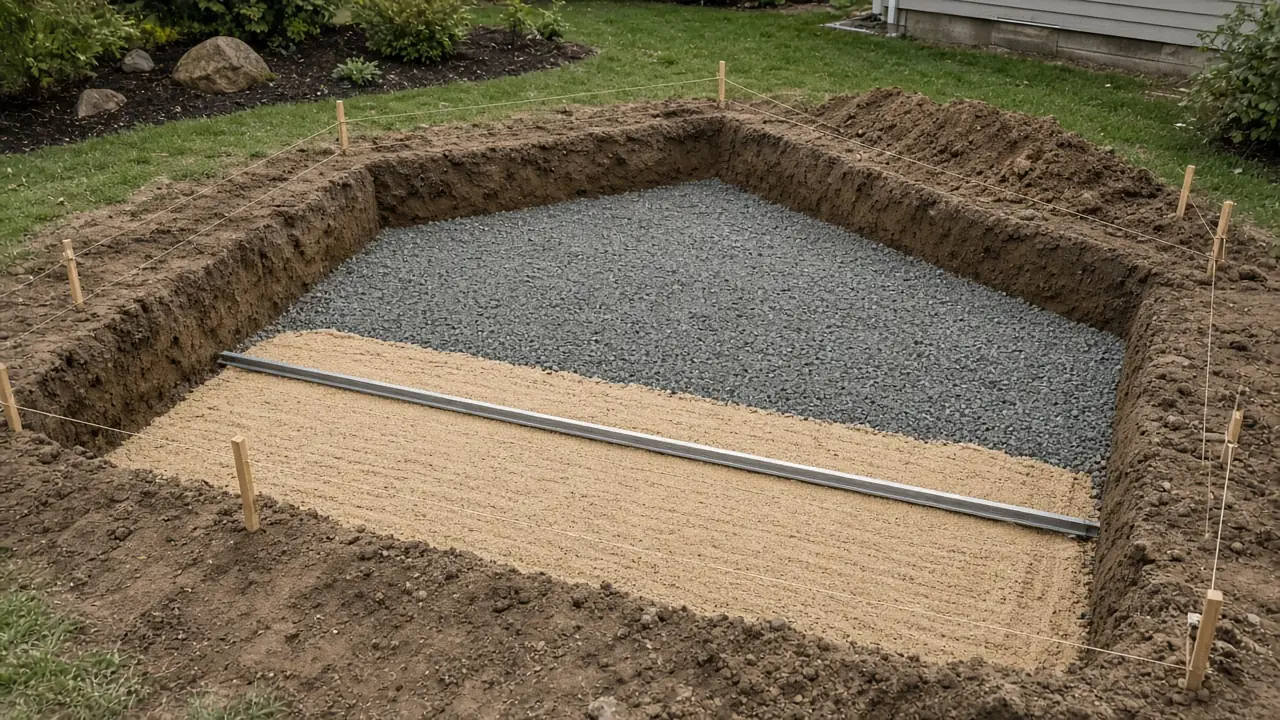
Wait for DigAlert 811 markings before digging. Drive stakes around your perimeter plus extra room on every side for edge restraints. Tie mason string sloped downward away from the house at about 1/4 inch per foot (roughly 2 percent — a common drainage target, and the minimum slope Alliance Gator lists for its polymeric sand). Always keep finished paver height well below your stucco weep screed or door thresholds.
2 Excavate and compact subgrade
Dig to a uniform depth equal to: compacted crushed base (4 inches minimum on well-drained soil; often 6 to 8 inches on heavy or poorly drained clay) + about 1 inch of bedding sand + paver thickness (60 mm / about 2-3/8 inches is a common pedestrian paver). Pull out roots and organic turf, then tamp the bare soil firm.
3 Pack 4+ inches of crushed base rock in lifts (6-8 on clay)
On heavy clay, lay geotextile fabric in the bottom of the excavation. Add damp crushed aggregate base rock in thin lifts (about 2 inches at a time with a hand tamper, or in lifts a plate compactor can densify — ICPI discusses compacting base in roughly 4- to 6-inch lifts with appropriate equipment). Compact each lift hard until footprints barely mark it, and build to the full compacted thickness you planned, not just a single 4-inch layer on wet clay.
4 Screed 1 inch of coarse concrete sand
Lay two 1-inch outer-diameter metal conduit pipes parallel on top of the compacted base, dump coarse washed concrete sand (not fine play sand), and pull a straight 2x4 across the pipes. Slide the pipes out and fill the grooves carefully with a trowel. Do not walk on the screeded sand.
5 Drop pavers straight down, spike edging, and lock joints
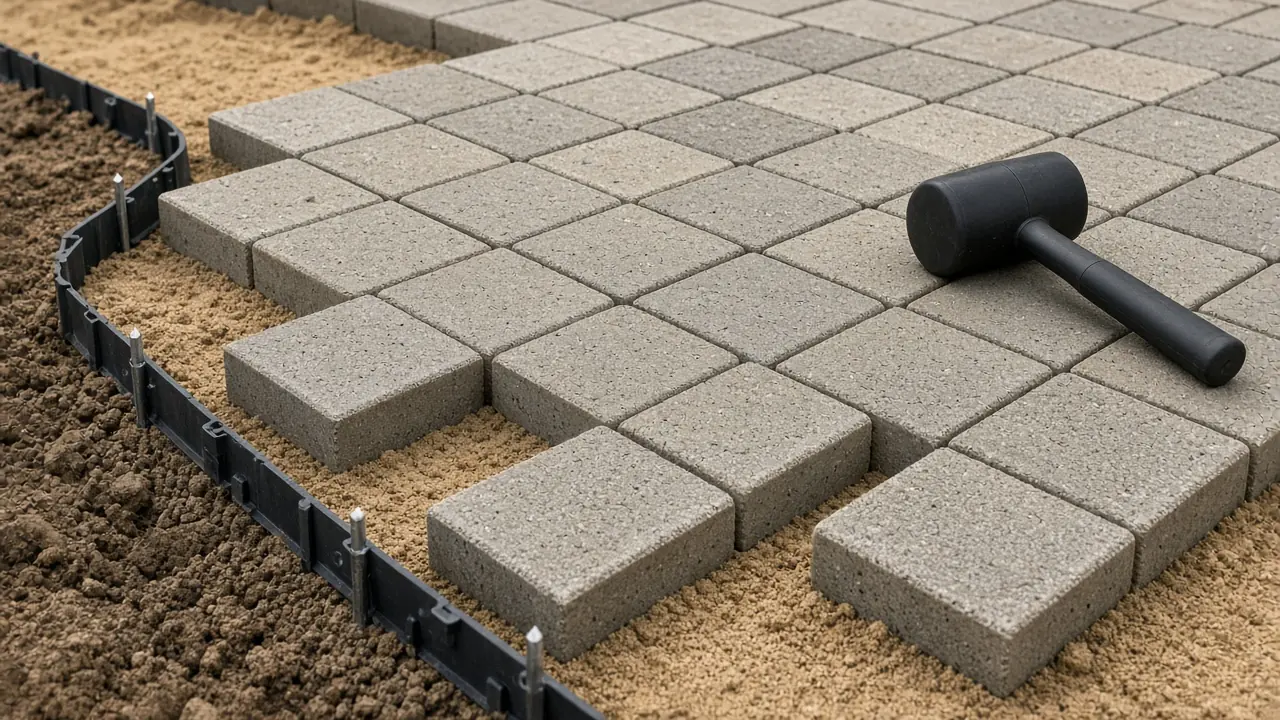
Working forward from the edge of the laid pavers, click each paver straight down onto the sand — never slide them sideways. Nail plastic or aluminum paver edging tight around open edges into the compacted rock base. With the paver surfaces completely dry, sweep polymeric sand into the joints, consolidate it (Alliance Gator’s G2 instructions call for vibrating it in with a plate compactor and a protective pad, then repeating until the joints stay filled), blow all dust cleanly off the paver tops so haze does not glue to the surface, and activate with water exactly as the bag instructs. Keep the patio dry for the cure time listed on the bag.
Common questions
- Can I lay pavers right on dirt or a bed of plain sand without crushed gravel?
- It will heave and settle unevenly within a year or two on Southern California clay. The compacted crushed rock base is what spreads weight and drains winter water.
- What kind of sand goes under pavers vs. between pavers?
- CMHA (formerly ICPI) guidance is a loosely screeded layer of washed, coarse bedding sand about 1 inch thick (not thicker than about 1-1/2 inches, and not stone dust or limestone screenings) underneath the pavers. Polymeric joint sand goes in the top joints after the pavers are set, edged, and — when the sand product requires it — compacted. Never use polymeric sand as a bedding layer, and only apply it to a dry surface, following the bag.
- Do I need a permit for a ground-level paver patio?
- Simple ground-level patios on grade usually do not trigger structural permits in most cities, though setback, lot-coverage/impervious-surface rules, or HOA architectural approvals can still apply. Check before excavating.
When to call a pro
Hire a licensed masonry or landscape contractor (C-27 or C-29) if your yard needs retaining walls, steps on a slope, a large driveway/parking pad (which needs thicker base and thicker pavers), or complex wet-saw curves around drains.
These guides are general information. Follow the manufacturer’s instructions and local codes, and hire a licensed pro when in doubt. Read the full disclaimer.
As an Amazon Associate I earn from qualifying purchases. Affiliate disclosure.
Next step
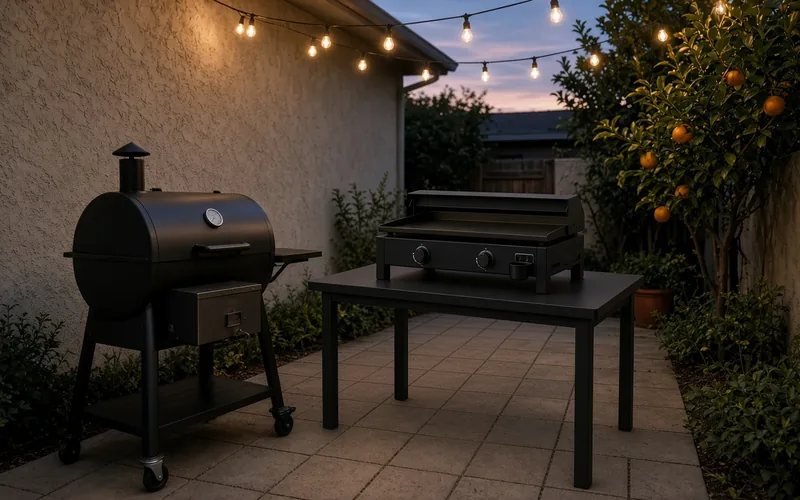
Our picks for pellet grills and griddles for a small SoCal yard
Compact pellet grills and tabletop griddles for small Southern California patios, including clearances and GFCI power.
6 minute read
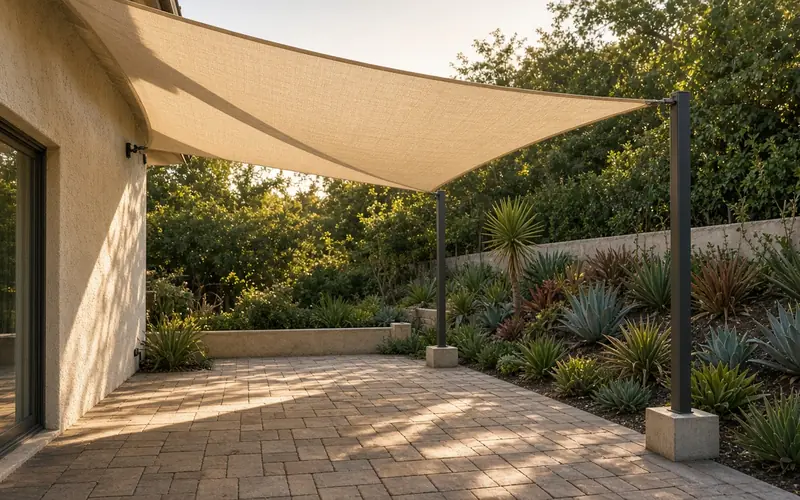
How to install a shade sail that survives Santa Ana winds
How to mount a shade sail in Southern California, including posts, anchors, tension, wind, and 811 safety.
6 minute read