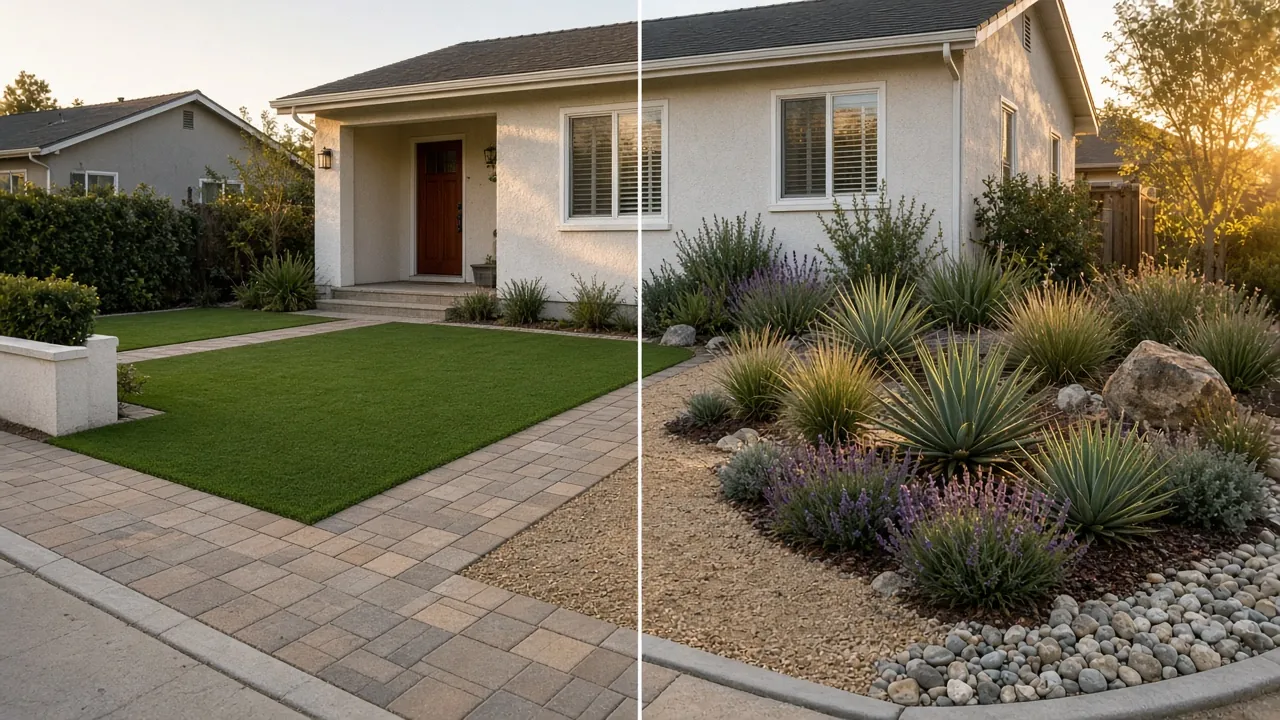
Artificial turf vs. drought-friendly landscaping in Los Angeles
Replacing a thirsty lawn is the biggest water-saving change most Los Angeles homeowners make — and the decision almost always comes down to two paths: synthetic turf or California-friendly drought landscaping (native plants, permeable mulch, gravel paths, and drip irrigation). On paper both look low-maintenance. On an August afternoon in the Valley or a rainy January week on LA clay, they behave very differently.
I work construction around Los Angeles, and I have torn out plenty of badly installed artificial turf as well as neglected gravel yards. Here is how each actually holds up, plus what the official LADWP Turf Replacement Rebate covers and explicitly excludes.
Product links on this page are affiliate links. If you buy through one, I may earn a commission at no extra cost to you. Read the affiliate disclosure.
Before you dig
- Call 811 / DigAlert at least two working days before excavating lawn, shaping a swale, or trenching irrigation.
- Grade so water slopes away from the house foundation and stucco weep screed — never pile soil, mulch, or turf backing up against walls.
- Keep grills, fire pits, and heaters off synthetic turf, which can melt or burn.
This is the short list for this project. Read the full safety basics page for carbon monoxide, No-Burn days, GFCI and tester rules, and DigAlert 811.
Quick answer
Choose drought-friendly landscaping if you want a cooler yard, real soil drainage, habitat, and eligibility for the LADWP Turf Replacement Rebate. Choose synthetic turf only if you specifically need a flat, mud-free play surface for kids or dogs and can live with hot afternoon plastic, regular rinsing, and zero turf-rebate eligibility.
How they actually compare in Southern California
- Surface heat in summer. Artificial turf gets hot in direct SoCal sun — hot enough to burn bare feet or dog paws in inland valleys. California native shrubs, shade trees, and natural bark mulch stay dramatically cooler and lower ambient yard heat around the house.
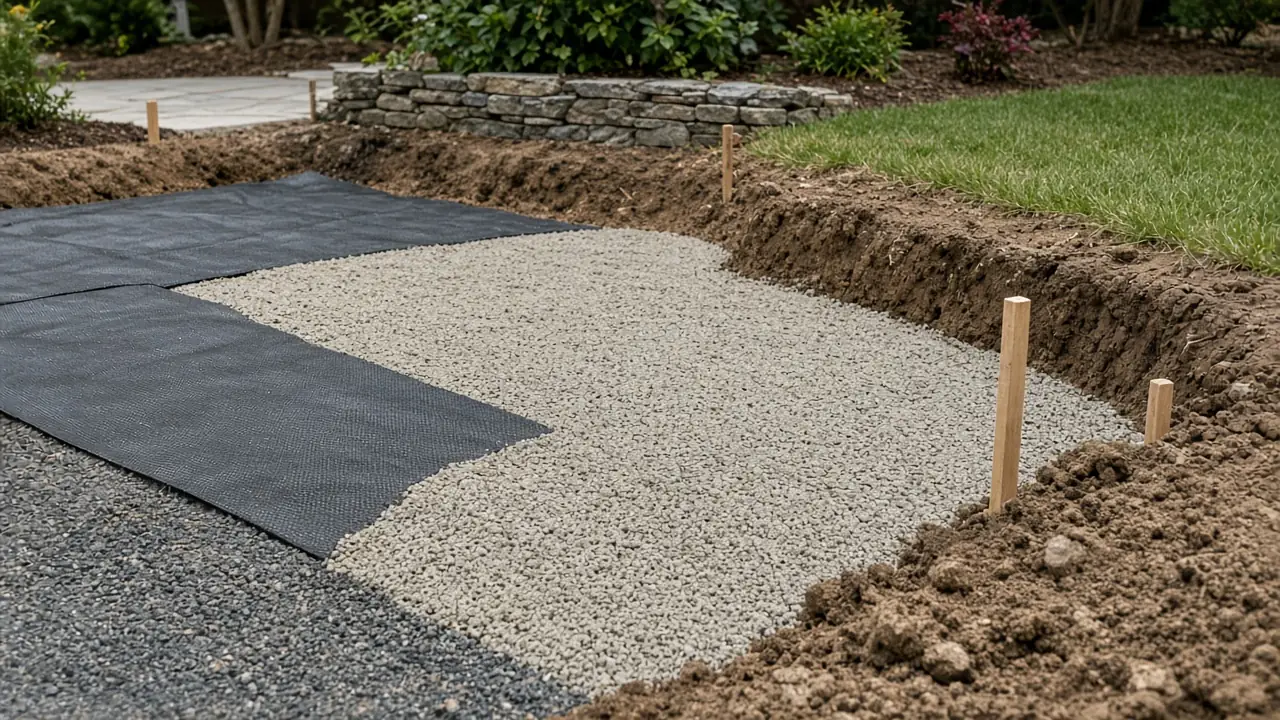
- Drainage on LA clay. Both systems still need good grading away from the house slab. Good turf installers excavate several inches of clay and compact crushed rock underneath so rain drains; cheap turf rolled directly over clay turns into a spongy swamp. Mulched drought beds with a small swale or rain garden actually soak rainwater back into the ground.
- Pets and upkeep. Neither option is zero-maintenance. Turf still needs blowing off leaves, brushing matted fibers, and enzyme rinsing if dogs use it (or trapped urine bakes in the sun). Drought gardens need seasonal pruning, drip checks, and fresh mulch every couple of years.
- Fire and heat near patios. Synthetic turf melts from embers, stray charcoal, portable fire pits, and even intense sun reflection off low-E windows. Never put a fire pit, chiminea, or grill directly on artificial grass.
LADWP Turf Replacement Rebate: verified rules
Last checked: November 22, 2026
If you are an LADWP water customer replacing live grass, check the official LADWP Turf Replacement Rebate page and the SoCal Water$mart rebate eligibility requirements before a single shovel touches the lawn. Key program rules verified on those official pages (always re-check, because program details can change):
- Pre-approval is mandatory. You must apply and receive an approval / reservation of funds before removing any grass or starting the project. Projects already started or finished do not qualify. Dead or dying turf and bare dirt also do not qualify — you need existing live grass.
- Synthetic / artificial turf is NOT eligible. LADWP and SoCal Water$mart explicitly exclude synthetic turf from the Turf Replacement Rebate.
- Minimum area. Residential projects must remove at least 250 square feet of existing turf. If the entire site has less than 250 square feet of turf, all of that turf must be removed.
- Required landscape features. The converted area must include California-friendly plants (SoCal Water$mart requires at least three plants per 100 square feet in the project area; existing trees that remain can count), keep the area permeable to air and water (impermeable patios, decks, or other structures in the project area are not eligible), convert overhead spray irrigation (drip, micro-spray, bubblers, or rotating nozzles — or cap the system and hand-water; no overhead spray in the finished project), and include a stormwater / rain-capture feature such as a rain garden, dry creek, swale, rain barrel, or cistern.
- Timing and 5-year requirement. LADWP’s rebate page states you must complete the project within six months of pre-approval. Approved landscape conversions must stay in compliance for at least five years.
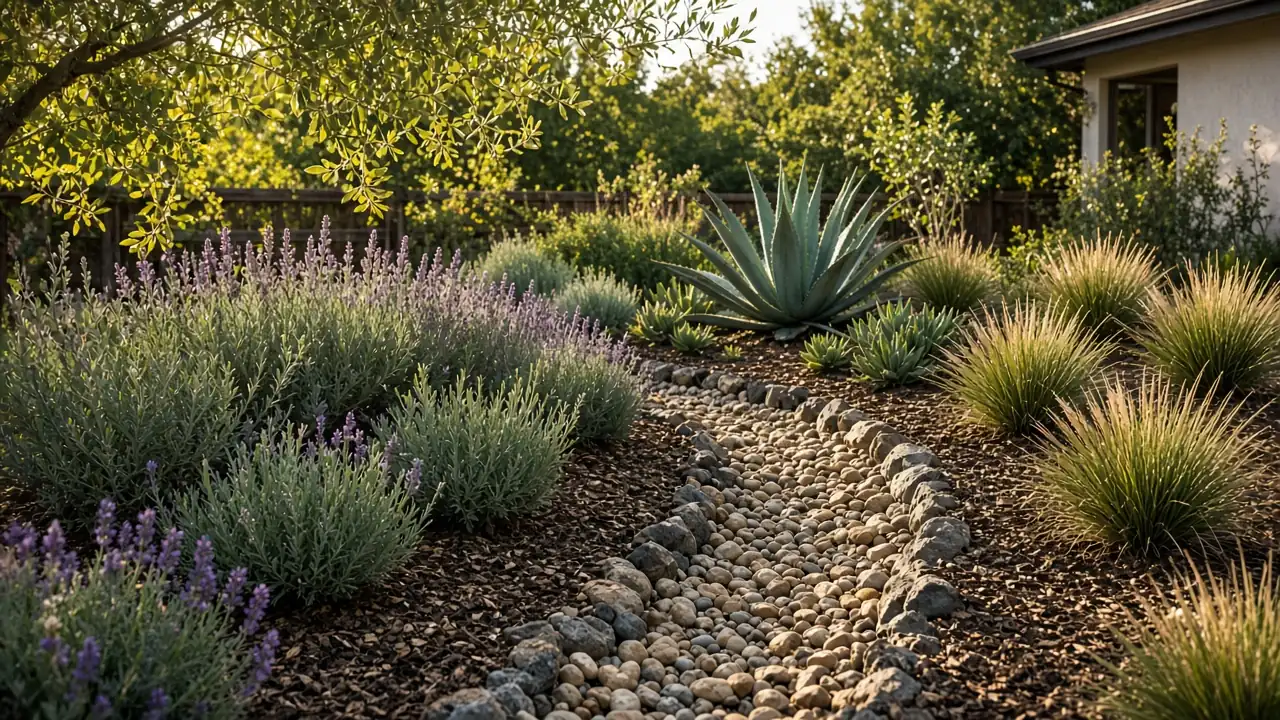
How to decide and get started
1 Walk the yard in peak afternoon sun
Notice which zones bake all afternoon and which sit in tree shade. High-heat zones close to south or west walls are miserable over plastic turf and do much better with shade trees and drought plants.
2 Decide if LADWP rebate rules fit your plan
If you want the rebate, photograph your live lawn and submit your LADWP/SoCal Water$mart application before shutting off water or killing the grass.
3 Call 811 before any trenching or excavation
Utility lines, shallow irrigation mains, and house cleanouts run right through front lawns. Get 811 marks before excavating base rock or shaping a stormwater swale.
4 Build drainage first, surface second
Grade soil so water slopes away from your house foundation and stucco weep screed. Never pile mulch, dirt, or turf backing up against stucco walls or wood siding.
Common questions
- Does LADWP give a rebate for artificial grass?
- No. LADWP’s official Turf Replacement Rebate explicitly states that synthetic/artificial turf is not eligible. Only living, drought-tolerant landscape conversions meeting the program’s plant, mulch, irrigation, and stormwater rules qualify.
- Should I put landscape weed fabric under bark mulch in a drought garden?
- Usually no. Plain soil with 3 inches of coarse bark or wood-chip mulch lets water, air, and organic matter reach plant roots. Save heavy woven fabric for separating gravel walkways or paver rock bases from muddy clay.
- Can I put a grill or fire pit on artificial turf?
- Keep open flames, hot ash, and radiant heaters off synthetic turf. Even stray sparks or a hot grease drip will melt permanent holes in turf blades.
When to call a pro
Hire a licensed landscape contractor (C-27 in California) if you need heavy clay excavation, grading changes near your house slab, a large synthetic turf installation with proper compacted aggregate base, or a full irrigation manifold rebuild.
These guides are general information. Follow the manufacturer’s instructions and local codes, and hire a licensed pro when in doubt. Read the full disclaimer.
As an Amazon Associate I earn from qualifying purchases. Affiliate disclosure.
Next step
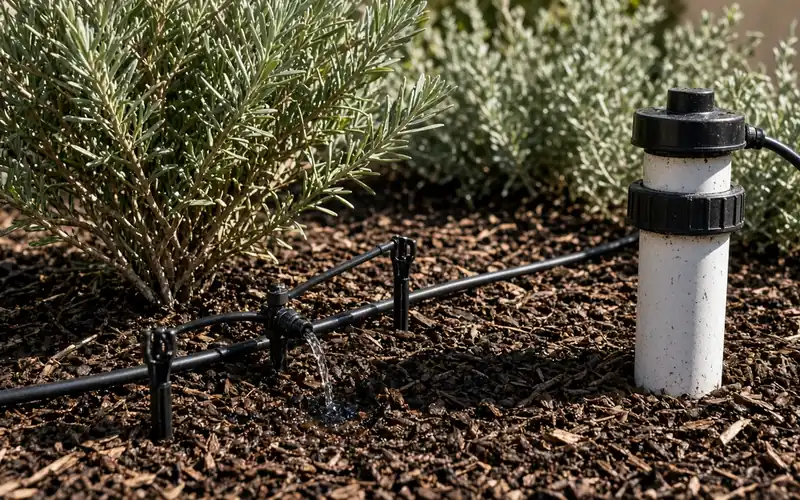
How to convert a sprinkler zone to drip irrigation
How to convert a pop-up sprinkler zone to pressure-regulated drip irrigation in Southern California.
6 minute read
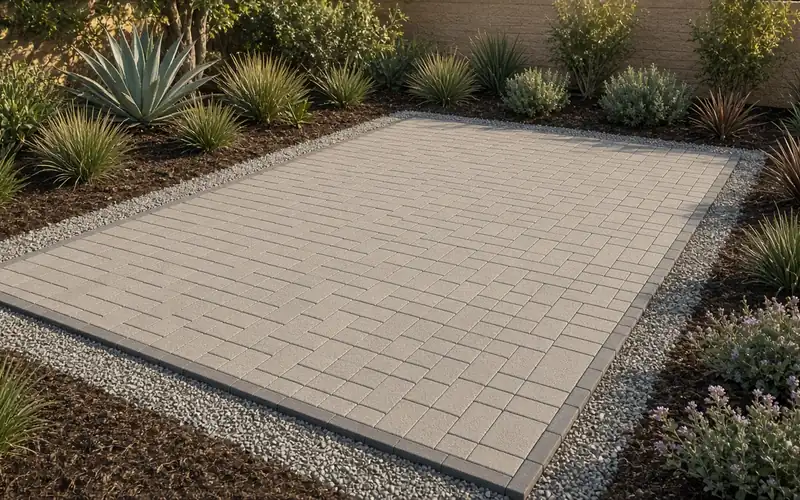
How to build a simple paver patio that stays flat
How to excavate, compact a base, and lay a simple paver patio that stays flat on Southern California clay.
6 minute read